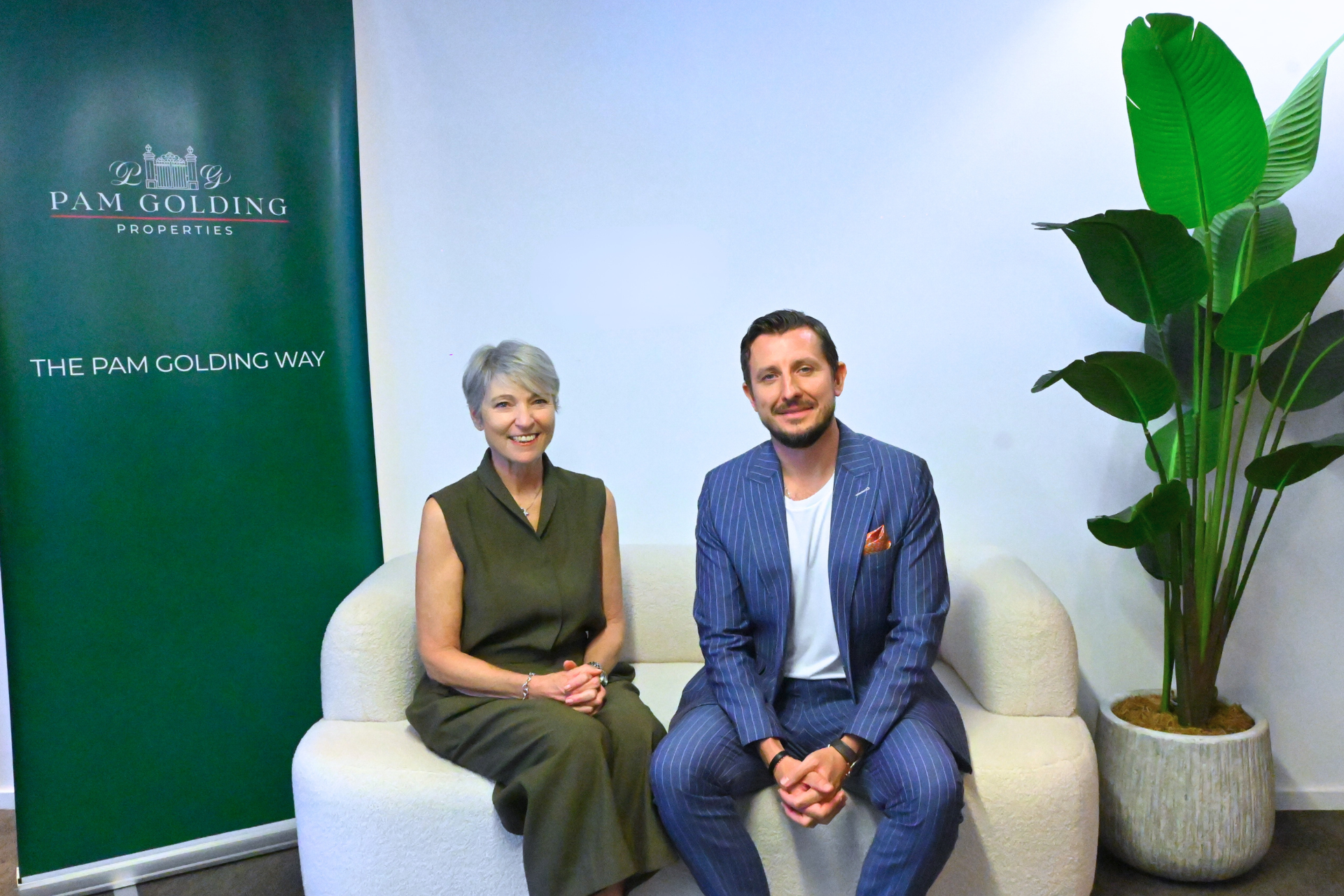
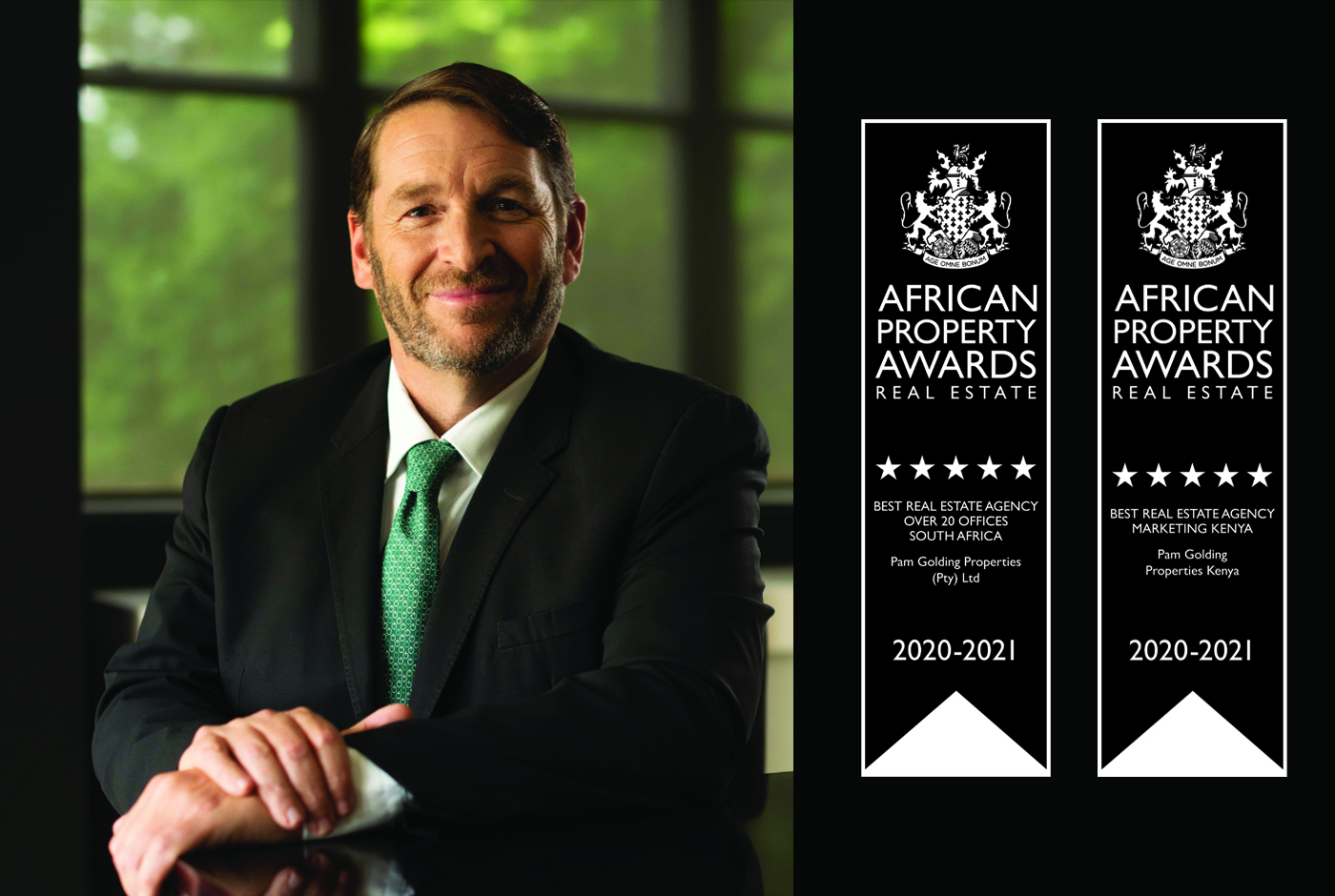
Few people can say they witnessed Dubai’s real estate transformation from the early freehold years to the globally recognised market it is today. Billy Rautenbach can.
With more than four decades in property and first-hand experience during Dubai’s formative years, Billy now returns to the city as Operations Director of Pam Golding Properties UAE. Her career has spanned early market expansion, the evolution of regulation, brokerage leadership and long-term mentorship. Today, she is leading the introduction of a 50-year heritage luxury brand into one of the most competitive real estate markets in the world.
In this conversation, she shares what those years have taught her about leadership, standards and accountability, and why the timing felt right to bring Pam Golding Properties into Dubai.
You’ve spent more than four decades in real estate, including Dubai’s earlier years. What has that journey taught you about leadership?
When I first came to Dubai, freehold had just been announced. It was an extraordinary time. The market was only just beginning to form. Developers were new. Projects were spaced apart. You might see one or two launches a week, not five or six a day like now. They were well launched, well priced, and there was opportunity everywhere, both for agents and for investors.
But what people forget is that there weren’t many experienced sales professionals here at the time. Dubai had been predominantly a rental market. So we relied heavily on people with international real estate experience, and we learned as we went. There was a lot of trial and error.
One of the most exciting parts for me was working alongside the Dubai government during the early conversations around regulation and the formation of RERA. We were in meetings discussing what the industry should look like and what needed to be built around it. It really did feel like I was living through a phenomenon. I remember thinking, if someone asks me what I was doing in 2004, I’ll say I was part of something that reshaped an entire property landscape.
From a leadership perspective, that period taught me a great deal. I’ve been fortunate to have strong mentors in my life. Some showed me what to do. Others showed me very clearly what not to do! I learned that leadership isn’t about control. It’s about clarity. You set the parameters upfront. You explain the expectations clearly. You make sure people understand what success looks like. And then you give them the space to operate within those boundaries.
Dubai also teaches you patience. You’re dealing with multiple nationalities, different communication styles, and different interpretations of instruction. You find yourself asking, “Is that clear? Do you understand? Let me show you.” That forces you, as a manager, to slow down and really think about how you communicate.
And then there’s perspective. I used to say to people who came into my office in a panic, “Take your shoes off.” They’d look at me as if I’d lost my mind. I’d say, “Take them off. Now put someone else’s shoes on. Walk in them.” It changes how you see a situation.
Early on, I assumed everyone wanted what I had grown up with in South Africa: a large home, a big garden, and space. That assumption was completely wrong. Not everyone wants that lifestyle. Not everyone can afford it. Not everyone values it in the same way.
That was a huge lesson for me. Don’t assume. Listen. Listen to your agents. Listen to your clients. Understand where they are coming from before you decide what they need.
For me, that’s leadership. Clarity, accountability, patience, and the discipline to listen before you act.
Dubai has evolved enormously since you first worked here. Beyond the headlines, what do you believe truly defines the market today?
I think the Dubai real estate market has matured significantly, but at the same time, it still feels young. When I first worked here, we would go down to the Land Department with two pieces of paper, two cheques and an agent, and that was more or less the process. Today, the structure is completely different. Escrow accounts are firmly in place, title deeds are issued properly, regulations are stronger, and overall transaction security is far more robust. The stability of the market is on a different level compared to the early days.
At the same time, the energy has not slowed down. If anything, it has accelerated. Developers are constantly launching. One of the biggest shifts I have seen recently is the rise of the EOI, the expression of interest. Buyers are effectively queuing up to commit to projects before full details are even released. Years ago, people queued for a number to secure a unit. Now they queue to secure an EOI position. It shows confidence, but it also shows how competitive the environment has become. I feel like I lived through one phenomenon in the early 2000s, and now I am watching another one unfold.
What really defines the market today for me, though, is the difference in access to information. As a brokerage, we receive updates from developers every single day. New launches, specific units, revised payment plans, and last remaining opportunities. We are constantly informed. Buyers are not. Most buyers only see what is directly marketed to them, so their view of the market can be quite narrow. That makes it a tricky landscape, especially for first-time buyers or international investors who are not familiar with how Dubai operates.
If I were a buyer today, the first thing I would do is appoint a knowledgeable broker. Someone who understands the development and off-plan landscape and can filter the noise. Everyone has their own budget, timeline, needs and ambitions, but before you get specific, you need clarity. Once the landscape is properly mapped out, you can narrow down options with confidence rather than reacting to whatever is being pushed at you.
The approach also differs between off-plan and resale. In off-plan, the broker often plays a bigger role in shaping the direction, because there is so much choice and so much marketing around each launch. In resale, the client usually knows what they want. They know the school catchment area, their commute time, and their lifestyle priorities. In that scenario, the agent's job is to listen carefully and guide on pricing and expectations.
Instead of just diving into viewings, I usually sit down with the client, and we create a timeline. I'll ask them when they realistically want to move, and then we work backwards from there in a very practical way. If there's a mortgage involved, that needs time. If they still need to sell their current property, that can add months. Registration takes time. Even just finding the right place can take longer than people expect. When you lay it out clearly at the start, the whole process feels far more manageable. It is a simple exercise, but it manages expectations from the beginning. And if you do not set those expectations early, clients naturally become anxious. They start asking why something is delayed, what has gone wrong, and whether progress is being made. A short discussion at the start saves hours of stress later.
Of course, things can still go wrong. A sale might collapse at the last minute. A bank might take longer than they promised. There are always variables. But if the client already sees how you're handling the process, knows you're in control, and feels you've got your finger on the pulse, they feel less concerned about the whole thing.
At this stage of your career, what drew you to Pam Golding Properties (PGP), and why did Dubai feel like the right next step?
I was at a point in my career where I had started to ease off slightly. I wouldn’t call it semi-retired, but I was definitely considering slowing down. I was preparing to relocate to my holiday home and spend more time with my husband and my cat. That was the plan.
Then a friend mentioned that PGP was looking for a manager. I thought it sounded interesting and should at least have the conversation.
I met with a regional manager who said to me, “Billy, you’re overqualified for this role. You should speak directly to Andrew.” She was referring to Dr Andrew Golding, the Chief Executive of PGP and the son of the founder, Pam Golding herself. He leads the company today and is very hands-on in shaping its direction internationally.
When I met Andrew, he asked me a simple question. “Why Pam Golding, and why now?”
My answer was very straightforward. If I’m going to make a change at this stage of my career, it has to be upward. PGP sits at the top of the luxury property market in South Africa. It has a 50-year legacy, a strong reputation, and it’s a brand people aspire to work for. Why would I go and work for something smaller or less established? This felt like the right final chapter for me. If I were going to move, I would move properly.
Andrew offered me the role of Head of Lead Management and Referrals to build and structure a new division within the business. That was the start of my journey with the company.
A few years later, while visiting Dubai with my husband, I reconnected with an old colleague. He asked me why we had never built something together here. I told him very clearly that I would not come to Dubai without a strong brand behind me. Entering this market independently would not have made sense. If I were going to do it, it had to be with Pam Golding Properties.
So when I returned, I set up a meeting with Andrew. I was fully prepared to convince him that Dubai was the right move. I sat down and asked him, “What’s your appetite for Dubai?” His answer was immediately positive. At that point, I knew we were aligned.
Of course, it required a proper business plan and careful preparation. We initially explored one partnership route, which did not materialise, and Andrew encouraged me to continue looking. That was when I was introduced to SVN Capital. They were looking to build a real estate arm to complement their investment offering and provide a turnkey solution to their clients. When I explained that I would only enter Dubai under the PGP brand, it actually strengthened the conversation rather than weakened it. They really understood the value of luxury, credibility and alignment.
The timing worked well. The company was ready to expand into the UAE. SVN Capital wanted a strong real estate partner. I had both the Dubai experience and the brand behind me. It genuinely felt like the right place at the right time.
Dubai real estate can feel fast and transactional. How does PGP’s people-first philosophy translate into practice in this market?
Dubai moves quickly. There’s no getting away from that. A lot of people arrive here wanting to make money fast. Investors want to get in and get out. Agents sometimes think the same way. The focus becomes on the transaction.
For me, and for the company, it has to start with people. Whether it’s the agent, the buyer, the tenant or the landlord, if you genuinely put the person first, the transaction follows. If you push the deal all the time, clients will feel it.
Even in recruitment, I don’t start by asking about numbers. I ask, what do you actually love about real estate? What makes you want to do this job? And then I ask, what do you want out of this role?
The answers are fascinating. Not everyone says money. Some want flexibility. Some want to work in an area they know well, while still having the freedom to work in other areas. Some want respect. Some want support. Then, when I mention mentorship, people often look surprised, because they’re not used to hearing that word in this market.
There’s a real difference between being a manager, a coach and a mentor. A manager focuses on performance and delivery. A coach helps someone improve a specific skill. A mentor looks at the bigger picture. They’re thinking long term about that person’s development, not just this month’s numbers. Those roles can overlap, but they’re not automatically the same thing.
My husband is a complete sports fanatic, especially when it comes to cricket, so I hear a lot about how cricket teams work. Every player has a very specific role. You’ve got the batsman, the bowler, the fielders. Each one knows exactly what they’re responsible for, but none of them operates in isolation. They rely on each other. Around them, there’s a coach, a manager, sometimes a fitness coach, all looking at the individual and asking, 'What does this person need to perform better?' That’s how I see our team here.
If an agent tells me they want to earn more than they did last year, I’ll ask them how much more. We’ll put a number down and then break it into practical steps. How many listings does that require? How many conversations? How many viewings? It becomes achievable because it’s structured.
What also matters to me is that the agent wants to learn. This industry changes constantly. You cannot stand still. The advantage we have is the backing of a 50-year-old global brand. There is a strong infrastructure behind the scenes, including IT systems, CRM, marketing support, and in-house training. That support allows agents to focus on improving their craft instead of reinventing the wheel.
It’s the same with clients. Quite often, someone will arrive in Dubai and say, “I’ve got two weeks, I want to buy something.” And my first reaction is, are you sure you want to do that to yourself? There is so much happening in this market that if you try to see everything in a few days, you just end up overwhelmed.
So instead, I’ll say, let’s slow this down for a moment. Let’s understand what you’re actually trying to achieve. What’s the goal here? Once that’s clear, the process becomes much simpler. They can still move quickly if they want to, but at least they’re making a decision with their eyes open rather than reacting to pressure.
You cannot slow Dubai down. It is fast. But you can introduce structure. You can introduce clarity. You can guide people methodically. It does not have to be slow, but it does have to be steady. When agents and clients operate that way, the results are stronger and the relationships last longer.
You’re leading a heritage brand into one of the most competitive property markets in the world. How do you personally approach that responsibility?
It’s a huge responsibility. When you’re carrying a 50-year-old brand into a market like Dubai, you cannot take that lightly.
I hold myself to the highest standards, and I hold myself accountable for results. I’ve always believed you cannot expect someone to do something you wouldn’t do yourself. If I don’t understand a process, if I can’t explain it, if I can’t demonstrate it, then I have no right to demand it from someone else.
That doesn’t mean I need to be the expert in every area. But I do need to understand how things work. I need to know how to add a listing properly. I need to understand how the CRM functions. I need to know how the marketing process flows. If there’s a system in place, I should be able to sit down and use it. If an agent is struggling with something, I should be able to guide them through it. It’s about knowing the mechanics of the business and being willing to step in when necessary.
I take that very personally. If someone in my team is not clear on something, that reflects on me. If the standard drops, that reflects on me. I’m accountable for the culture, the performance, and the reputation we are building here.
I’m not always the first person in the office in the morning, but I am always the last to leave. So I hold myself to a high standard. Anyone who has worked with me knows that I operate that way, not just as a manager, but as a human being.
As you establish PGP in Dubai, what standards are non-negotiable for you?
It always makes me smile when I'm asked that, because it's the standards I live by every day. For me, it starts with knowing your craft. I've had interviews with people who say they can handle their own marketing or that they are excellent at a particular aspect of the business, but when I test them on it, they can't really answer those questions.
In interviews, I don't just ask what someone did. I ask how they handled certain situations. How did they deal with a difficult client? What happened when something went wrong? The detail tells you everything. It quickly becomes clear whether someone understands their work or whether they are repeating something they think sounds impressive.
Honesty is non-negotiable. Many people embellish their CVs. They stretch experience. That doesn't impress me. What matters is whether your skills translate into real estate. Can you communicate clearly? Do you listen properly? Are you willing to learn? Do you continue to grow? Those things matter more than a list of achievements.
I am a tough manager, but I'm also fair. If you tell me you're going to do something, I expect it to be done. If you tell me you don't know how to do it, then I'll help you get there. If you tell me you will never be able to do something, at least I know where we stand. That clarity makes everything easier. It comes back to setting expectations from the beginning and being realistic about your strengths.
Everyone has something unique about them. In real estate, that uniqueness is important. Clients don't just choose a company, they choose a person. They are trusting that individual to think about their interests every day. That is a responsibility.
I love training and mentoring new people, and I will always make time for that. But while we're building this operation, we can't compromise on capability. This market is sophisticated. Clients are sharp. They expect you to know what you're talking about. So learn the process properly, understand how the market works, and then you'll grow naturally from there. We cannot put clients in inexperienced hands while we are establishing a brand of this calibre.
What kind of real estate professional do you believe would feel aligned with the culture you’re building in Dubai?
An agent who genuinely cares more about people than about transactions.
Yes, we are in a sales environment. Yes, money matters. Of course it does. Most agents set a financial target for themselves at the beginning of the year. They put a number in their head and say, that’s what I want to earn. There’s nothing wrong with that. But the next question has to be, how are you going to get there?
You have to look at the activity behind it. How many people do you need to speak to? How often are you speaking to them? At the end of the day, there is a person sitting across from you who has a lot riding on that decision.
And that person doesn’t come to the table empty-handed. They bring uncertainty, pressure and often a fair amount of emotion. Buying and selling property is never neutral. It affects families, finances and futures. If an agent only sees the commission at the end of the process, they will never build something sustainable.
The agents who align with this culture are those who understand that long-term success comes from properly looking after people. Yes, have a monetary goal, but just remember, behind everything that we do is a human being. And every human being needs a place to live.
If that responsibility excites you rather than intimidates you, then you’ll fit in very well here.
As PGP begins its chapter in Dubai, what would you like clients and future colleagues to understand about the way the brand is being established here?
The first thing is that this is a heritage brand with very clear values. The company has been operating for 50 years and is one of the leading luxury real estate companies on the African continent. That carries weight. It carries history. And it carries responsibility.
When you represent a brand like this, you do not treat it casually. Pam Golding was a real person. Andrew Golding, her son, leads the business today. So when you hand someone a business card with that name on it, you are representing a legacy, not just a logo.
For me, luxury is not only about price points. It is about how you treat people. It is about time, attention and care. Time is one of the greatest luxuries any of us has, so when a client gives you their time, you honour it. You don’t rush them. You don’t treat them like a number. You operate with a certain level of professionalism and composure.
That same standard applies internally. If you join this business, you are expected to carry yourself in a way that reflects the brand. You cannot say you work for a luxury company and then operate without discipline or attention to detail. The way you communicate, the way you present property, the way you follow up, all of it matters.
Yes, there are many luxury brands in Dubai, and we are well aware of our competitors. But our responsibility is to bring the same discipline, integrity and care to this market that have defined Pam Golding Properties for five decades. Our job is to make sure we uphold our end of the bargain.
To learn more about Pam Golding Properties UAE and current opportunities, please get in touch.